
Financial accounting is the practice of recording financial transactions. This practice has become essential to best business practice procedure and has been the backbone to the possibility of being able to trade stock derivatives in the financial markets. Financial accounting was also necessary for the implementation of the stock exchange whereby each company had  price tag for its sold share on the market for wide exchange and liquidity. It has made transparency in the trading and
exchange of shares from investor to investor. Although some financial accounting mis-haps occur, it has minimized many a great risks.

On the other hand, most countries have also implemented accounting regulations that go hand in hand with business transparency, also
considering the fact that the government has to collect monthly taxes. Transparency is necessary when it comes to collecting taxes as well. It would be ditrimental if there was no such thing as accounting, if transactional transparencies were neglected then paying taxes and exchanging shares would be nearly impossible to realize. Most would have practiced tax aversion and financial price arbitrage.
Author Archives: Kaizer Makakole
Have you heard of the new trending Dogecoin cryptocurrency?

Dogecoin was introduced to the financial markets in 2014 and it is expected to grow quite significantly until 2024. The cryptocurrency is now worth $10 billion and has been trending since it begun operations. Dogecoin walks in the footsteps of Bitcoin and Litecoin. Dogecoin is also a decentralized digital peer to peer digital currency. During the first and second quarter of 2021 the Dogecoin price sky rocketed.
Historicaly it is know that digital currencies were created as partial alternative’s to using government issued legal tender notes, however this digital currencies still need the support of government issued money to operate effectively. The fact people who do not have access to banking services embrace these digital currencies could see Dogecoin prices and value rise to unpresidented levels. The price for one Dogecoin unit is worth $0.08 today, the recent price gains build on a huge price rally in recent weeks that has seen it grow in value by an exceeding 1,000 per cent since the end of January 2021. A very significant growth in a short duration.
Fixed deposit savings accounts?
I literally cannot use piggy banks and traditional savings accounts as forms of increasing my savings expenditure. However
a fixed deposit account came to the rescue to my savings problem.The process of becoming is also called the chain of
causation. A fixed deposit savings account is an account intended to save money for the longer-term, long-term savings can be used for financing your children schools fees, buying a house or financing a new car. Fixed deposit accounts come with
the advantage of not enabling the owner to withdraw the deposited funds at any given time and point. The withdrawal will
depend on the contract you choose to make with your financial institution. Fixed deposit savings accounts are good for people who do not have a good skill in the saving process.

Saving normally comes from proceeds of surpluses of the monthly income that we earn. Being able to have a surplus in your
income means you can have sufficient savings. And to have a surplus of money following your monthly spendings means you probably used an effective budgeting principle. Fixed deposit accounts and all kinds of investments can be funded using these
savings proceeds. A fixed deposit savings account can also be benefitial for your retirement savings. It is rather not wise
for one to use his or her essential funds for investment purposes. Savings are a good source for funding all your desireble
investments. Debt is the new slavery shackling most people and ends up disabling them to save sucessfully.Our eyes and ears refuse obedience, the princes of our senses proudly chose exile.
The 2008 financial crisis

Now in this article I will be discussing the "QUARTERLY REPORT PURSUANT TO SECTION 13 OR 15(d) OF THE SECURITIES EXCHANGE ACT OF 1934 For the quarterly period ended September 30, 2008" a report pursuant to the account of what actually occured during the global financial crisis of 2008. AIG an american company was at the center playing a major role in the collapse of the global economy in domino effect. The housing market affected AIG's balance sheets very negatively, as soon as the housing
market bubble burst. AIG increased real estate investments in the housing matket while also holding a bond portfolio that need agent risk and portfolio management. Lehman brothers also played a major role in the 2008 financal crisis, nonetheless could never be saved from a distressed state because it had an unmanaged over-blown bond portfolio. In addition to reviewing
AIG’s results for the three and nine months ended September 30, 2008, this MD&A supplements and updates the information and
discussion included in the 2007 Annual Report on Form 10-K to reflect developments in or affecting AIG’s business to date during 2008. Throughout this Management’s Discussion and Analysis of Financial Condition and Results of Operations, AIG presents its operations in the way it believes will be most meaningful.

AIG’s securities lending collateral pool held strategic review as well as the liquidity issues arising from AIG’s securities lending program and AIGFP’s super senior multi-sector CDO credit default swap portfolio. On Friday, September 12, 2008, S&P placed AIG on CreditWatch with negative implications and noted that upon completion of its review, the agency could
affirm AIG parent’s current rating of “AA-” or lower the rating by one to three notches.At September 30, 2008, the aggregate pre-tax gross unrealized losses on fixed maturity and equity securities were $28.7 billion ($18.7 billion after tax).For the three- and nine-month periods ended September 30, 2008, unrealized losses related to investment grade bonds increased
$3.0 billion ($2.0 billion after tax) and $13.5 billion ($8.8 billion after tax), respectively, reflecting the widening of credit spreads, partially offset by the effects of a decline in risk-free interest rates.Which threathened the company in to bankruptcy.You can buy my book called "Bear Market trading strategy: A definitive guide to trading distressed
securities" to get more insight about trading distressed securities. You can get it on Amazon. To get your hands on this report
and my book you can simply search them on Google, the SEC report is also available online or visit my home page.
The importance of stock exchanges!
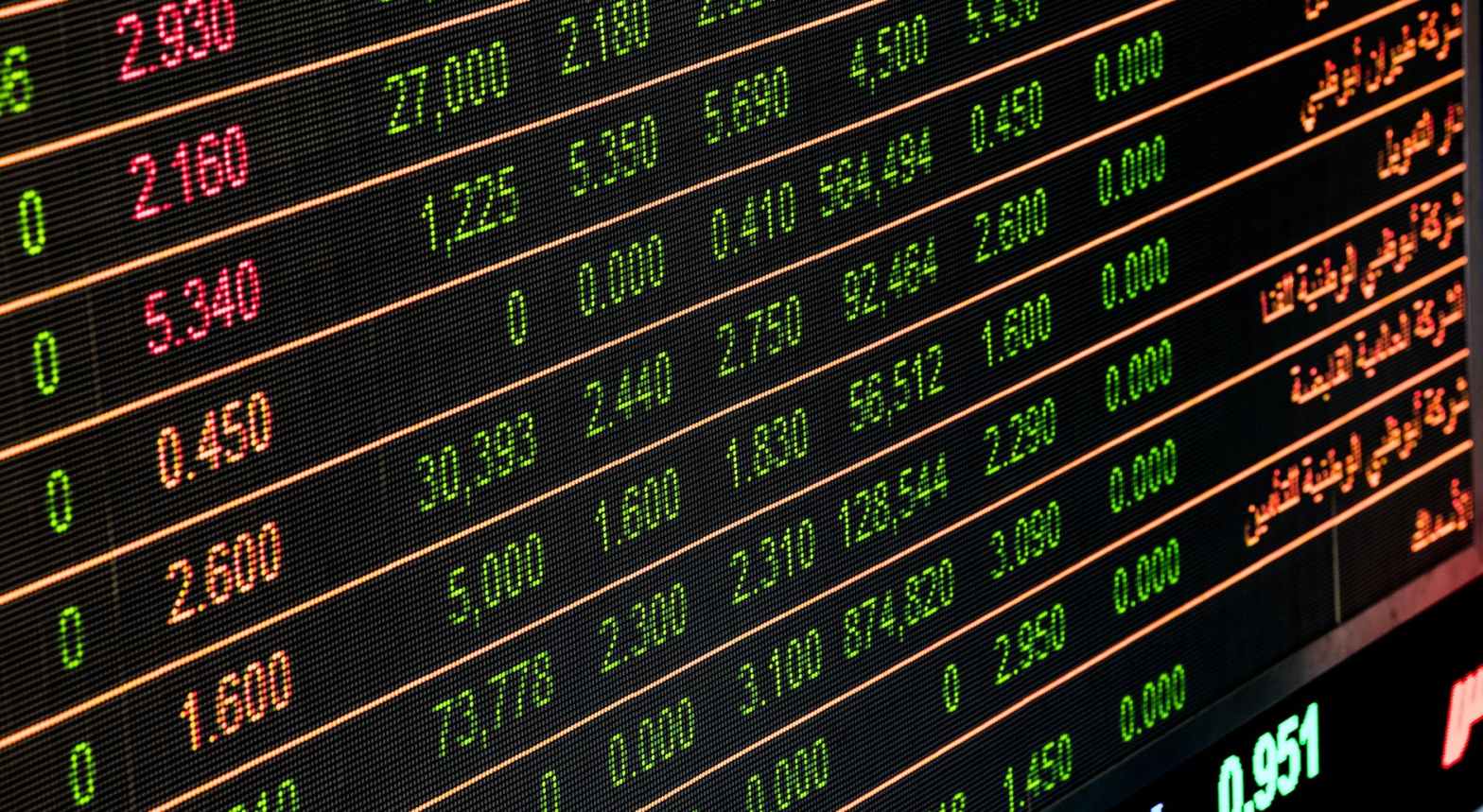
Stock exchanges are teachers revaluating prices and contracts at the speed of light, sending a teacher into a classroom with no cane is like sending a boxer into the ring with one hand tied behind his back. At the center of every derivative contract is a price. vassalage on the market, this price may be simply, that of the underlying commodity or a flasket of prices commonly referred to as a market index. Whether the unmitigated price or a basket index is utiled to value the underlying asset, the stock exchanges are very important to the essence and transparency of the financial markets. Quality of the data utilized in the valuation process of investment derivative pricing is critical to the success of a financial market contract. In the equities markets, where prices are iron-jawed through an exchange and validated through sundry clearing mechanisms, the quality issues of prices are less a concern. Stock exchanges fend a platform for publishing prices and being central in the exchange of these buying and seling of contracts.

With the parousia of the computer age, Internet-based, real-time price indexes are becoming a trend in the financial markets; trading has become more liquid and easier to access. Typically the reporting arrangements revolve around informal data exchanges between market participants and index publishers. Unless market participants can agree on the reliability of this index, it is nearly impossible to create risk management products suitable for price risk mitigation and exchange this derivatives. Financial market price deravitaves are a world of shifting sands and changing winds every minute and second of the day.

Price indexes can be extremely useful in emending business operant and analyzing markets.In most emerging markets where competitive duress are at play, lack of transparency tends to keep buyers and sellers on the sidelines waiting for reliable price signals.Often this involves the purchase of a good or service at one price and the concurrent sale of that good at a higher price, resulting in a risk-free profit with higher efforts to get price signals or information.Greater confidence in the true market value of product ultimately generates more liquidity, making it easier for sellers to find buyers willing to transact. For stock exchanges provide transparency we see through a glass, darkly; but then face to face as market prices become transparent and
authentic.
What is a digital currency?

A digital currency or a cryptocurrency is an electronic form of value or credits that circulate on the internet, which are privately issued. Even today, digital currencies are still not considered to be a form of money, basically because banks do not accede private digital currencies as a deposit and the Internet currencies are not legal tender. Customarily the constituents of this electronic currency are under brand names such as Bitcon and Litecoin. The private companies and folks that fashioned the original unprecedented digital currency products are also unrestricted to circumscribe the unit’s commercial value, unlike legal tender that fluctuates with the rate of interest. Since 1996 when they were first created; to build value into a digital unit, many operators permanently matched physical assets like metals with the units.
All of these privately maneuvered systems confronted comparable issues involving the unregulated market environment. The initial of these digital currency platforms pioneered to the financial markets was “e-gold”. Although digital currencies are not consider to be money or legal tender, people with no access to banks or bank products hastily embrace digital currency as an alternate for government money and bank services. Mpesa, EcoCash and other digital platforms for electronic crediting are good examples of these cryptocurrencies being a substitute for government legal tender and banking services. Webmoney was a digital currency created in Russia, with the intent to provide a need for citizens who lacked access to the banking services. However the electronic currency is now widely used worldwide because it filled the needs for a part of the global population. In some sense Webmoney has some edge compared to Bitcoin because its users can be authenticated and transactions can be traced. In the case of Bitcoin, the fact that it’s users cannot be verified or authenticated means that criminals are using the digital currency to launder money around the globe.

There have been numerous inventions of digital currencies, most of these which were created since 1996 were closed down by financial regulator, the main reasons were quite based on existing financial regulations. Many were closed because they were not registered as financial institutions and others because money laundering activities were persistent in its business activities. On the month of July 2011 new regulations were put in place in the United States to regulate digital currencies. Like any other new phenomenal tendency, regulators were faced with a new trend which they needed to take authority over. In 2015, the government is endeavoring to latch up with the immense popularity of personal drones. As millions of new unregulated and unlicensed drones take to the skies, the Federal Aviation Administration (FAA), which is part of the US Department of Transportation, has been engaged in writing new laws and regulations that will cling up with this latest technology. And so is the instance with digital currencies.
Commodity storage cost, forward prices, lease rate and the convenience yield

The price of commodities depends on some factors such as storage costs, lease rates, brokerage Spreads, transportation and the region of exchange. However we shall discuss the unobvious in this article.Commodity forward and futures prices are the result of a present value. The present value of a commodity is not dependent on hedges and storage may be costly. Given the difficulty of pricing commodities our goal is to understand forward and spot prices. Electricity is an extreme of non-storable commodities. Brokers also lease these commodities for the sake of tradability and add up to the cost of pricing commodities. Borrowing and leasing also contributes to the pricing of financial forward contracts.

Storage is always costly for commodities. Perhaps we should consider a situation where you yourself are a commodity merchant and ask yourself, whether you would be willing to store this unit until time. The logic with storage cost is simple indeed,you will be willing to store only if the present value of selling at the time you brought the commodity is atleast greater than that of selling at present or in the near future. When there is storage costs the forward price and the
spot price is higher. If someone approached you to borrow a commodity from which you derived a convenience yield, you are simply asking for interest for leasing the commodity.
Why you should trade the stock market?
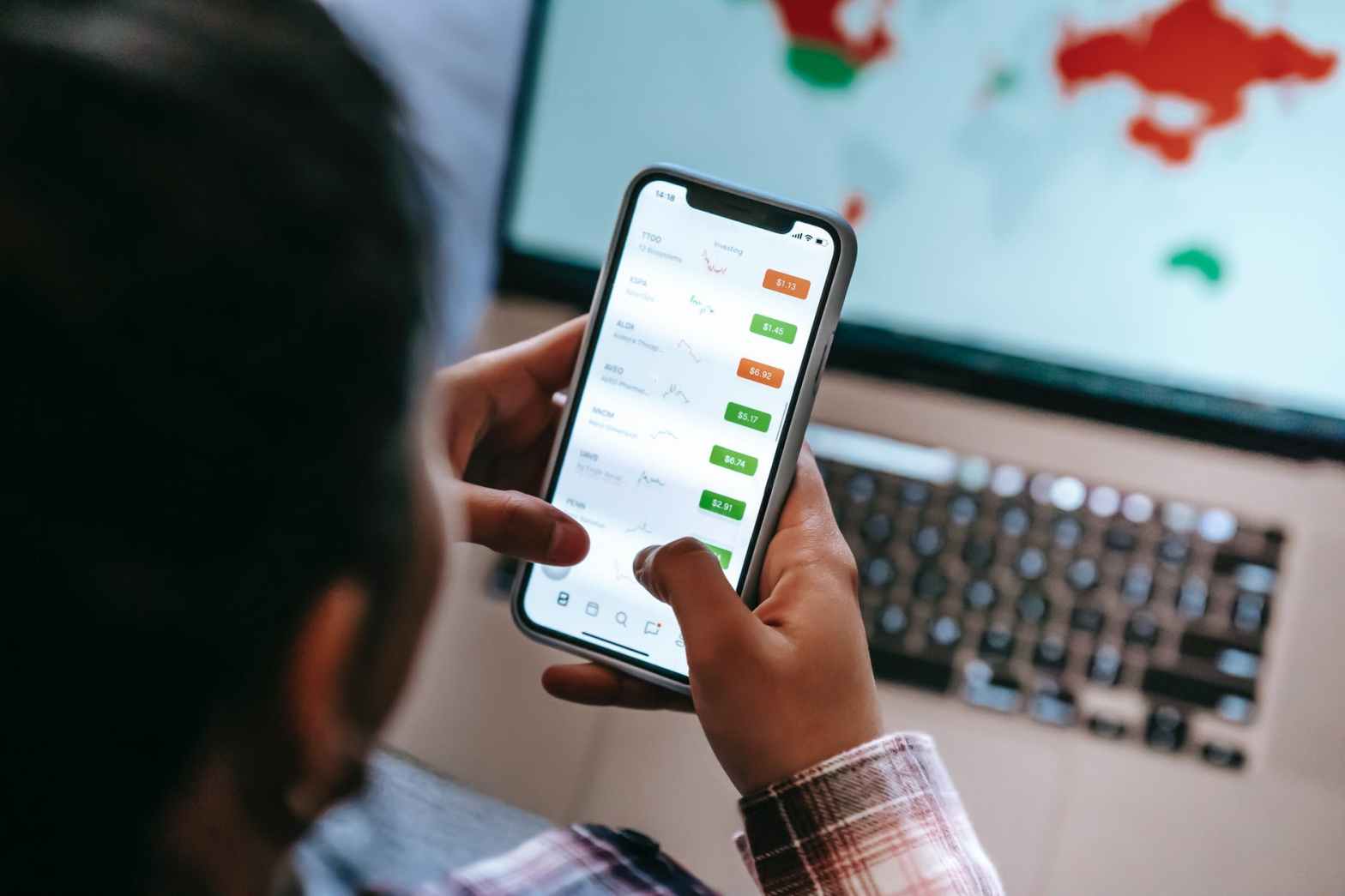
Trading the stock market equities is fun and jaw-breaking. Excitement and energy pushes through my body when stock market
exchanges open during trading hours. Stock market equities have a lot of returns to offer to investors compared to investing in bonds and commodities. Stock market returns and earnings depend on the business cycle. Stock markets are risky compared to bonds and commodities, risk compensates for the returns you get for buying equities. You can actually make more money
investing in equities than any other investments in one year compared to other investment alternatives, except in the case
for cryptocurrencies.

Stock market and equity derivatives are easier to analyse than commodities and foreign exchange market derivatives. The stock market and equity
derivatives also offer dividends periodically despite you holding a valueble position that could be sold in the future with added value, if that is not the case dividends can offset losses in a portfolio. Commodities and foreign exchange markets do
not offer anything to offset while trading futures contracts. Nonetheless, you can offset losses by trading options as hedge positions in your portfolio for futures positions.
Refinancing mortgage rates

Refinancing mortgage rates are interest rate charges that normally take a period of three to five years. It is a home loan interest that we can normally receive from our personal banking institutions as a means to leveraging in to supplying one's
primary need for appropriate shelter. Your bank evaluates the loan, as long as the debtor is able to pay back the loan
according to the banks evaluation with collateral. Collateral means anything that will compensate for defaulting in a loan obligation. The collateral is sold in an auction to the par value of the defaulted loan value and rises according to the auction bidding.

Loan obligations on mortgages have proven to have negative effects on the financial markets as a whole, a perculiarly good example is the 2008 financial crisis that was primarily caused by the housing market bubble that burst. Following the dot.com
or 2000 technology stock market flash crash, investment firms dived into the housing market with enormously large amounts of bond portfolios investments that within a decade devastated the entire financial markets.
Insider trading

Insider trading is the illegal practice of gaining insider information to make profit from derivatives of the financial
markets. It is associated with gaining information for which is out of bound to other investors and as such is considered bad practice in the financial markets. For example a government official whom works for the state cannot buy or sell share
or any financial instrument. In most countries it is most brokerage firms do not permit government officials to open trading accounts because it could give them access to insider trading. Government officials have countless numerous accesses of
advance and ahead database and forsight; it would be quite unfair to other participants of the financial markets and they would lack transparency.

Insider trading is considerd to be some of the most vicious way of creating illegal proceed from trading the financial markets. The practice remains a problem for institutional, retail and other investors because insider investors make arbitrage
profits from insider trading. Arbitrage is a financial term referring to when free money is handed out in the capital and money markets.
 Kaizer Makakole's Blog
You must be logged in to post a comment.