
Financial accounting is the practice of recording financial transactions. This practice has become essential to best business practice procedure and has been the backbone to the possibility of being able to trade stock derivatives in the financial markets. Financial accounting was also necessary for the implementation of the stock exchange whereby each company had  price tag for its sold share on the market for wide exchange and liquidity. It has made transparency in the trading and
exchange of shares from investor to investor. Although some financial accounting mis-haps occur, it has minimized many a great risks.

On the other hand, most countries have also implemented accounting regulations that go hand in hand with business transparency, also
considering the fact that the government has to collect monthly taxes. Transparency is necessary when it comes to collecting taxes as well. It would be ditrimental if there was no such thing as accounting, if transactional transparencies were neglected then paying taxes and exchanging shares would be nearly impossible to realize. Most would have practiced tax aversion and financial price arbitrage.
Category Archives: investing
Commodity storage cost, forward prices, lease rate and the convenience yield

The price of commodities depends on some factors such as storage costs, lease rates, brokerage Spreads, transportation and the region of exchange. However we shall discuss the unobvious in this article.Commodity forward and futures prices are the result of a present value. The present value of a commodity is not dependent on hedges and storage may be costly. Given the difficulty of pricing commodities our goal is to understand forward and spot prices. Electricity is an extreme of non-storable commodities. Brokers also lease these commodities for the sake of tradability and add up to the cost of pricing commodities. Borrowing and leasing also contributes to the pricing of financial forward contracts.

Storage is always costly for commodities. Perhaps we should consider a situation where you yourself are a commodity merchant and ask yourself, whether you would be willing to store this unit until time. The logic with storage cost is simple indeed,you will be willing to store only if the present value of selling at the time you brought the commodity is atleast greater than that of selling at present or in the near future. When there is storage costs the forward price and the
spot price is higher. If someone approached you to borrow a commodity from which you derived a convenience yield, you are simply asking for interest for leasing the commodity.
Why you should trade the stock market?
Trading the stock market equities is fun and jaw-breaking. Excitement and energy pushes through my body when stock market
exchanges open during trading hours. Stock market equities have a lot of returns to offer to investors compared to investing in bonds and commodities. Stock market returns and earnings depend on the business cycle. Stock markets are risky compared to bonds and commodities, risk compensates for the returns you get for buying equities. You can actually make more money
investing in equities than any other investments in one year compared to other investment alternatives, except in the case
for cryptocurrencies.

Stock market and equity derivatives are easier to analyse than commodities and foreign exchange market derivatives. The stock market and equity
derivatives also offer dividends periodically despite you holding a valueble position that could be sold in the future with added value, if that is not the case dividends can offset losses in a portfolio. Commodities and foreign exchange markets do
not offer anything to offset while trading futures contracts. Nonetheless, you can offset losses by trading options as hedge positions in your portfolio for futures positions.
Refinancing mortgage rates

Refinancing mortgage rates are interest rate charges that normally take a period of three to five years. It is a home loan interest that we can normally receive from our personal banking institutions as a means to leveraging in to supplying one's
primary need for appropriate shelter. Your bank evaluates the loan, as long as the debtor is able to pay back the loan
according to the banks evaluation with collateral. Collateral means anything that will compensate for defaulting in a loan obligation. The collateral is sold in an auction to the par value of the defaulted loan value and rises according to the auction bidding.

Loan obligations on mortgages have proven to have negative effects on the financial markets as a whole, a perculiarly good example is the 2008 financial crisis that was primarily caused by the housing market bubble that burst. Following the dot.com
or 2000 technology stock market flash crash, investment firms dived into the housing market with enormously large amounts of bond portfolios investments that within a decade devastated the entire financial markets.
Bond yields and stock market earnings.
In this artcle,I will be discussng the relationship between bond yields and stock market earnings in terms of individual
derivatives. From a fundamental level of understanding regarding capital and the rate of return, which imply interest of borrowed proceeds. Every proceed of financing that involves borrowing earns interest, as the case is with bond
investments unless someone is participating in arbitrage and donations. When an investor buys a companies stock, he she is simply borrowing capital to a company in the hopes of earning yields from the initial investment. The global economy and the financial markets are inter-connected, reflecting a mirror of each other. What I mean to expound in this article is the fact that bond yields and the stock market have a positive correlation. When bond yields rise on the longer term, earnings,return on capital, interest rates and the stock market are also expected to rise respectively.

Earnings, interest rate, bond yields and the rate of return on capital, reflect almost the same thing as synonymous words used in financial terminology. Individual stock market derivatives are affected positively when interests, yields and the rate of return are rising. Stock market dividens and the business climate are postive when bond yields are rising and better
economic prospects can be expected. Global growth that is primarily financed from a monetary level due to the demand and need for the use of currency.
Investing in renewable energy.
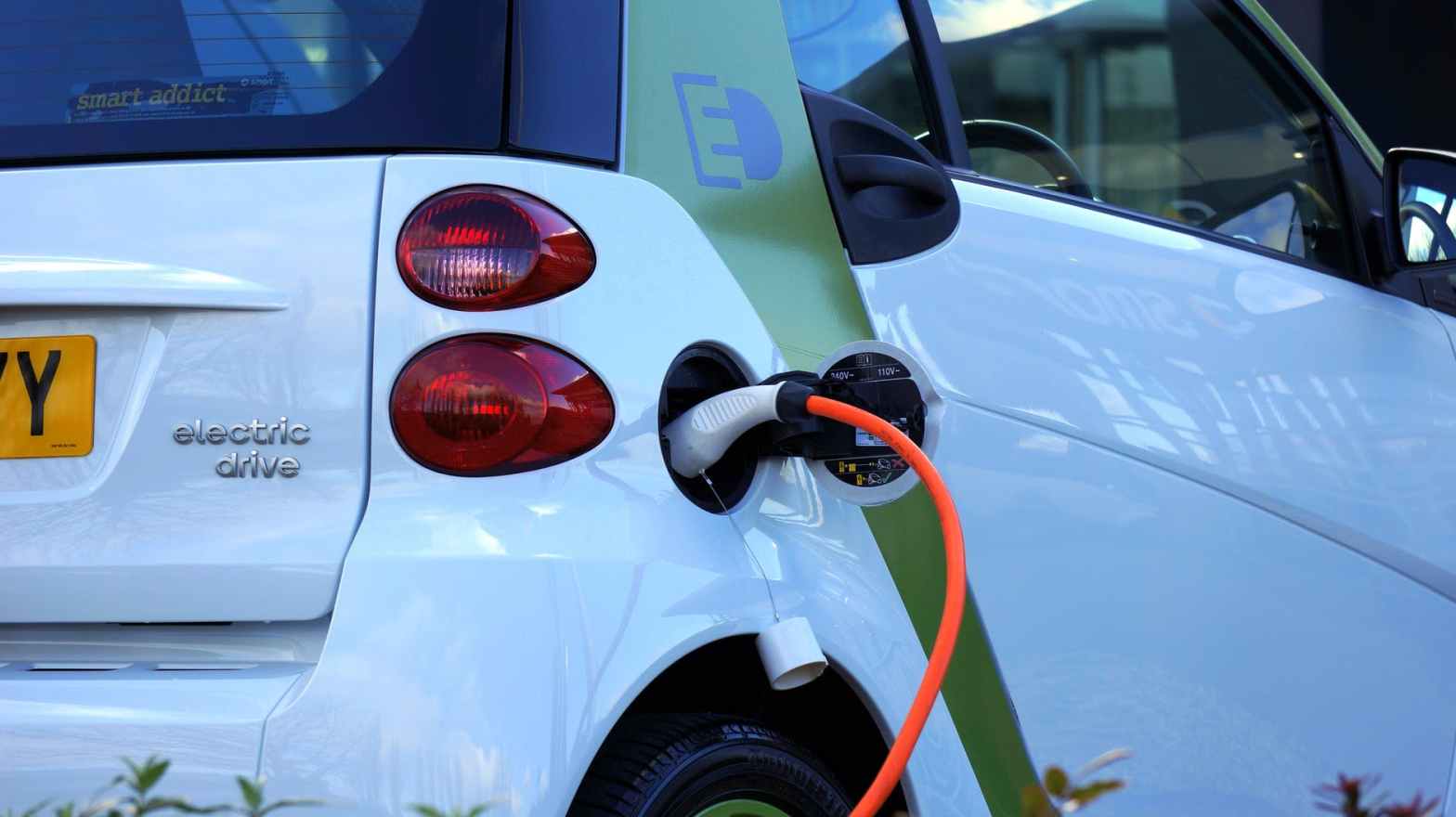
Investments in renewable energy have been trending in the past decade following the new need for environmentally friendly approaches to investing. Today, investors are able to put capital in environmentally friendly companies like Tesla with the intent to creating an electrically independent automotive instead of petrol and desiel powered engine cars. Algae innovation
and other renewable energy investments are becoming the norm and today, consumers are willing to buy and support goods and services with environmentally friendly approaches to doing business.

It is important for investor to care for the planet, for the destruction they have already done does not need recounting.Today investing in renewable energy can come with potentially great profitability into the very near future, nonetheless these
companies are going through the test of time because most are currently unprofitable. What this companies offer has potentiality for the future,primarily because some have file for IPO's and getting the chance to being listed on stock exchanges means investors have been seeing potentiality. The fact that this innovations and creativities will bring enormous frontiers to how we care for the environment and the planet that we live on, they will also bring about great changes to
how we live. Renewable investments are self-help investments that will drive the future.
What is the difference between a demo and a real trading account?
A demo account is an account fended by a brokerage firm to its clients, as an aleatory of providing beginner investors the
opportunity to trade a simulated environment of the capital and financial markets. Beginner investors destitute to get familiar with their trading tools and instruments such as softwares and the financial markets operatory in their true nature. As soon as a beginner investor has familiarized him/her self with the salient requisite know how of utilizing these trading
tools, softwares and the nature of the financial markets operations, then one can inchoate using a real trading account. When trading a real account the investor fully fathoms that investing in these financial instruments is risky and requires extra
caution when trading them.

A real trading account is an account provided by a brokerage firm to its clients, as a way of fending professional and
average investors such as retail traders the oppportunity to exchange financial and capital market instrument in order to generate fructuous investments as real life participation in the financial markets rather than a simulation. A real trading account
literally loses money while a demo account uses virtual credits as a form of money used for exchanging these financial instruments.
What is leverage?
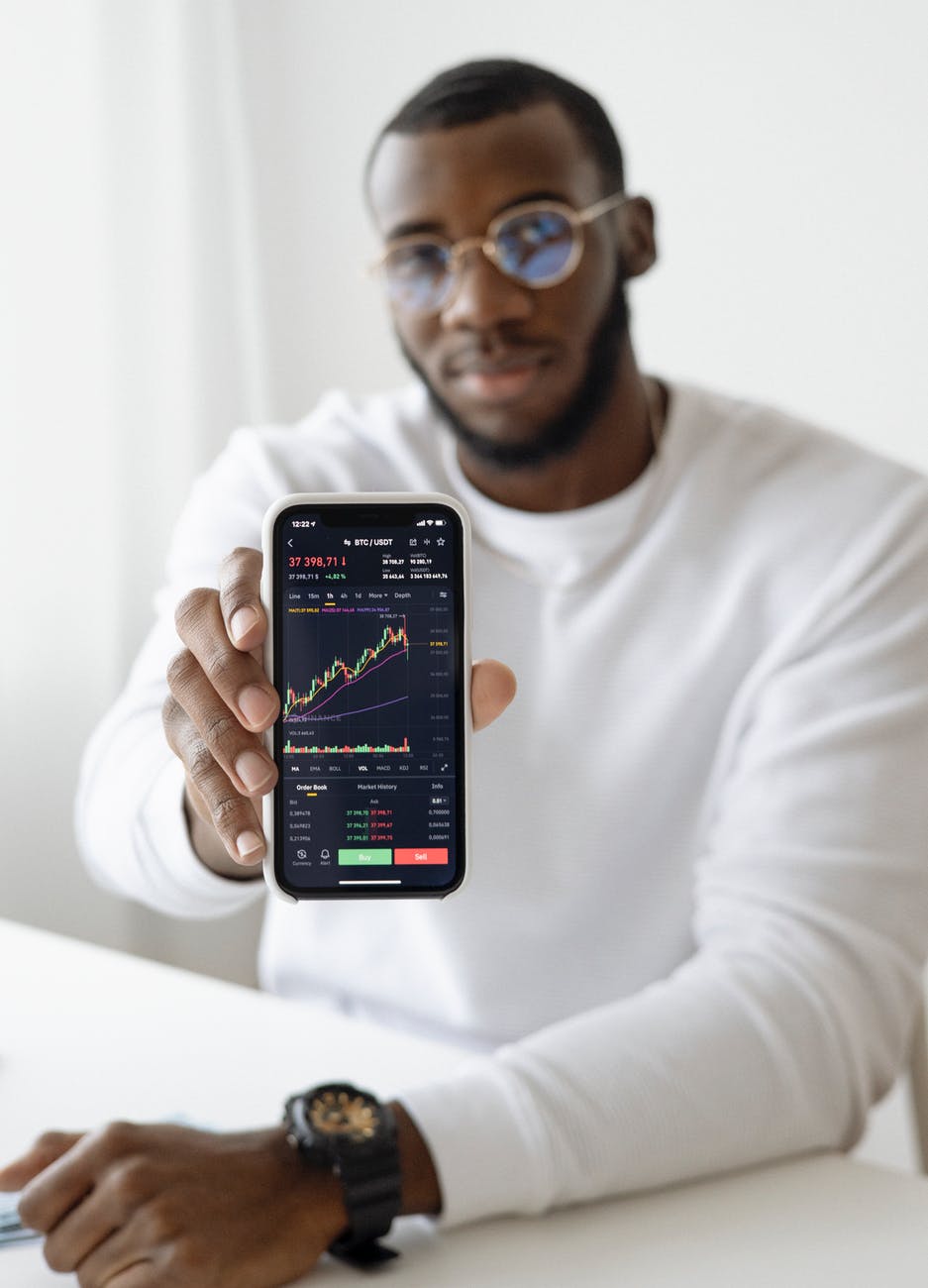
According to financial terminology leverage used by financial institutions is considered to be the borrowing of funds at a certain ratio. This borrowing ratios can be used by institutional investors as a way of generating even more profit in the process of investing. History has flaunt that leverage can be advantageous and disadvantageous. Leverage has proven
to increase the risk of investment portfolios by the same ratio of advantage it provides to investors. However when used approprirately can bring good fortunes to an investors portfolio.Leverage is a neck and neck situation.Leverage has also proven vise versa that its proper use can irrupt a portfolios ratio of profitability. Leverage is when one uses extra eclectic proceeds to generate
investment profits. Normally leverage is used by those who have something to put on the table. You funding your brokerage account demises you access to leverage. If you buy a stock price at $12 per share and your trading account has $100, you
could put $12 to buy 3 shares of the company, but you normally do not receive dividends for the 2 share of borrowed proceeds; you receive only dividends for one share. However when you sell your shares you will perpend for the profits or loses for
which your share prices value has changed.

Leverage is one of the primeval calprits that caused the 2008 financial crisis. Many institutions used proceeds of borrowed
money to purchase and hold financial securities which were soon going to be below the value of their initial buying period.
This instruments devaulued the balance sheets of many companies that held assets in the in the housing market. The housing market was a bubble primarily because it was financed by borrowed proceeds which were later futile in a market that dearth liquidity and was financed by the printing of money and quantitative easing. To get the go by of utilizing leverage
as an investor is also quite salutiferous.
How to make money with bond investments!

Buying bond investments is a less risky vehicle to crescent your money in the capital markets and comes with multifarious advantages.
Tax-free savings accounts from your local bank can provide you with this product features. You do not have to pay taxes
on the interest payments that are reliquary either monthly or quarterly depending on your account agreement. It is very unlikely
that your bank will default on paying its debt obligations to you. However if it does happen, the bank should devise to file for
bankruptcy at a court providing evidence that it is unable to pay its debt obligations, that its financial situation has caused the company to cease operations of the business as an on going matter. Under such a case those who had bond investments in the trustee of that bank or financial institute will be reparated with some of the its sold assets. In the case where the company is rescued by investors so that the operations of the company continue as an on going concerned, you as a bondholder could end up being compensated with the companies equity of shares to the value of your bond holdings.

Normally bond interest rates fluctuate on a periodical basis. The only risk that will fardel a bond investor are the expected cashflow streams of payments and the veracious fact that he or she may not be settled in time or approprately. Bond investments are like palladium and gold investments; tenable for they troth a continuum of cash flows rather than profit privation on some occassions. The cashflows are positive on an investors balance sheet and they are compounded monthly, quaterly and yearly depending on the bond
contract. Bonds can be purchased with your monthly savings which can earn interest when the money was putative to be idle. Idle money loses value over time especially when inflation irrupts,and so it is better to have your savings in some form of investment.
Can I lose money while trading the financial markets?

Intellectually and logically, one has to consider the aleatory of losing money while trading the financial markets. When trading
the financial markets one is actually in involution to the process of investing. Investing is a process of collocating capital
in an asset or security in trim of geniture to profits with the preceedes, however the process involves risky business. Risks that are involved embody geo-political/sovernty risk, market risk, credit risk, interest rate risk, financial settlement risk, and many more. Losing money on an investment is part and parcel of trading financial market instruments, however the
aim is making profits on many investments and having less losing investments in a portfolio. A portfolio consists of x,y
shares of a company, z bond investment and w commodity investment altogether as one during a particular time span.

There are no risk-free investments in the capital and financial markets. If there is such a vasculum, it is called arbitrage in
financial terminology. Arbitrage is a case whereby investors are handed out free money at no investment risk. Although bond investments are considered risk-free investments, they aren't totally free from any risks. Bond investment risk is primarily the fluctuation in interest rates and the fact that bond trustees may default on their debt obligations.Well, yes
one can lose money while trading the financial and capital markets, no sooner said than done.
 Kaizer Makakole's Blog